


New Zealand’s infrastructure spend is giving us lower value for money than almost every other country in the OECD according to Ross Copland, former Chief Executive of the NZ Infrastructure Commission Te Waihanga(Copland, 2024), and this needs to change.

NZ Transport Agency Waka Kotahi (NZTA), recognising that it had a gap in the monitoring and evaluation of its investment costs, recently commissioned Resolve Group to examine whether the variability of costs for common transport investments could be quantified, and what might be done to mitigate any differences.

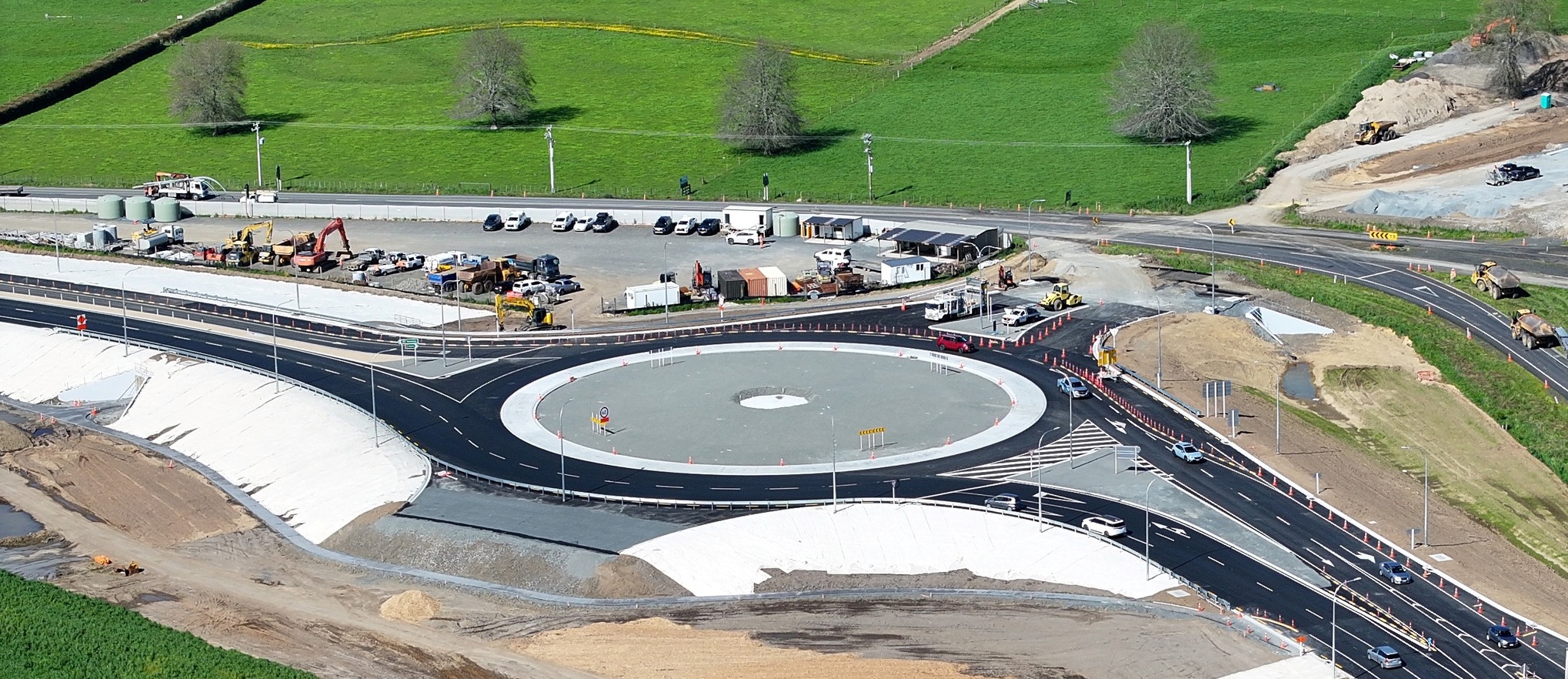
Assessing a sample of 21 similar intersection improvement projects (typically highway roundabouts or local road intersection improvements) delivered across New Zealand from 2016, the research, led by Dr Carron Blom and Jamie MacDuff, found that despite the physical similarities in many of these projects, there was a very high level of variability in the indexed costs of these projects on a unit area basis, even when outliers were excluded. The research could not find any correlation between out-turn cost per sealed area and the nett effect of key project cost factors (such as pavement type, level of traffic management etc.) or other factors that could be influenced by the NZTA.

Our experience at Resolve Group is that a ‘whole-of-system’ approach is necessary for New Zealand to collectively meet its current and future infrastructure needs and indeed, the research revealed the need for system-level mitigations to be able to effectively monitor and evaluate actual investment costs.

To enable NZTA to establish a benchmark for cost variability, and to support changes within its operating practices (such as the recently developed standard methods of measurement (SMoM) and improved definitions for cost elements ), Resolve Group has proposed a range of interventions that aim to reduce variability in cost measurement and reporting that are embedded and/or created within organisational policies and procedures, and to enable infrastructure costs to be more comprehensively recorded, understood, and used to help manage, monitor and  forecast future investment costs, and so improve value-for-money infrastructure delivery.
Resolve Group’s Mark Walker has recently been working with V2X Technology Partnership on a project in response to one of NZTA’s Hoe ki angitū Innovation Fund round two challenges – making road works safer for road workers and other road users.

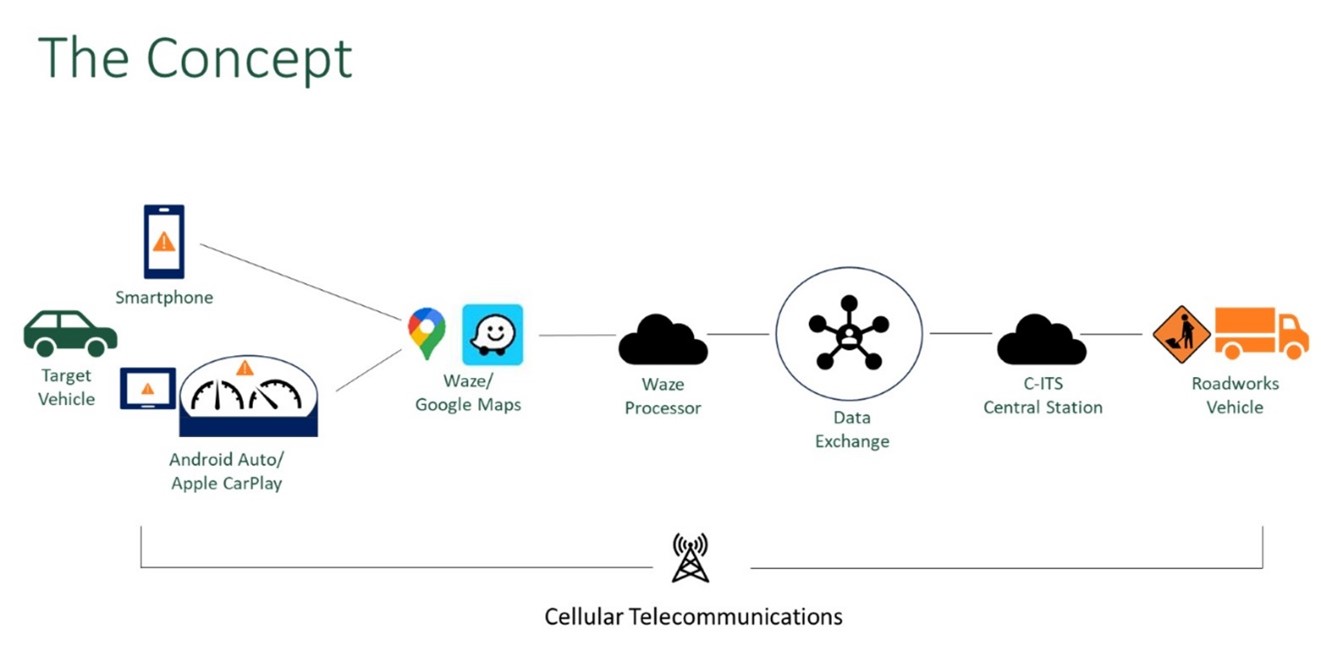
Through the implementation of cooperative intelligent transport systems (C-ITS) – wireless technology enabling real-time, co-operative communication from vehicle-to-vehicle or vehicle-to-infrastructure (and vice-versa) – the concept was to alert road users to potential roadwork hazards ahead of time. The project included collaboration between NZTA and Queensland Main Roads through the Austroads partnership.

In addition, a civil construction and traffic management industry survey was conducted to quantify current opinions and knowledge about C-ITS, and lessons learned were compiled suggesting ways forward for up-scaling through collaboration.
C-ITS concept

While Intelligent Transport Systems (ITS) focus on digital technologies providing intelligence placed at the roadside or in vehicles, C-ITS focuses on the communication between those systems – whether it is a vehicle communicating with another vehicle, with the infrastructure, or with other C-ITS systems; vehicles and infrastructure equipped with C-ITS can, for example, communicate warnings to each other in real time, allowing drivers to take timely actions to avoid potential harm.

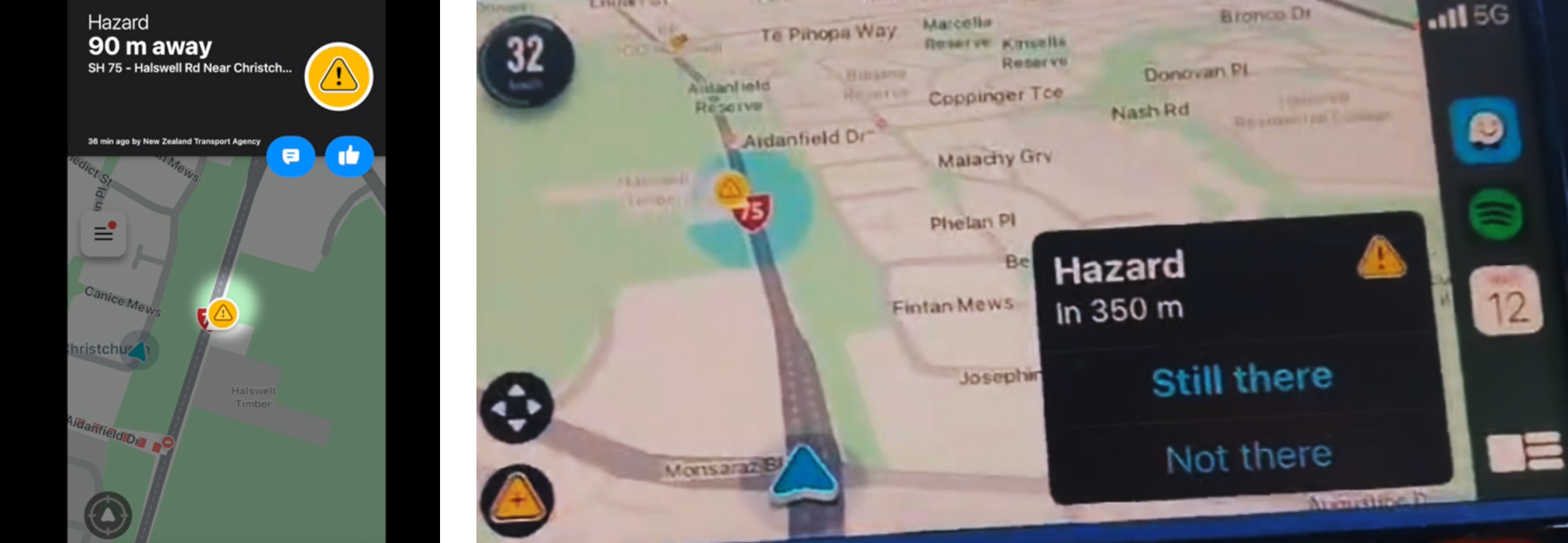
The project involved firstly creating a C-ITS ecosystem – sourcing C-ITS hardware and several inter-operable software systems, developing integrations to connect these systems, and connecting data to a traffic navigation app to receive alerts.

Working with civil construction and traffic management businesses, the C-ITS hardware was then deployed and tested on live sites by broadcasting roadworks alert messages.

Finally, collaboration with a local mobile data network provider enabled transmission of data from the hardware on site.

The first test of this kind to be conducted in New Zealand, messages from all participating active roadworks sites in Christchurch and Wellington, and on mobile road maintenance vehicles in Nelson, were successfully sent through the ecosystem, and received by the approaching vehicles used in each test scenario.C-ITS

The lessons learned over the course of implementing this project were that C-ITS has the potential to improve worker safety through improved driver warnings; that the components to establish C-ITS quickly and effectively in NZ are readily available; that there would be benefit in partnering with the private sector and with Australia in the development of a strategy for implementing an ecosystem through a National Access Point (NAP) and that the Austroads partners work together to develop an Australasian-wide digital platform for data exchange using C-ITS technology.