



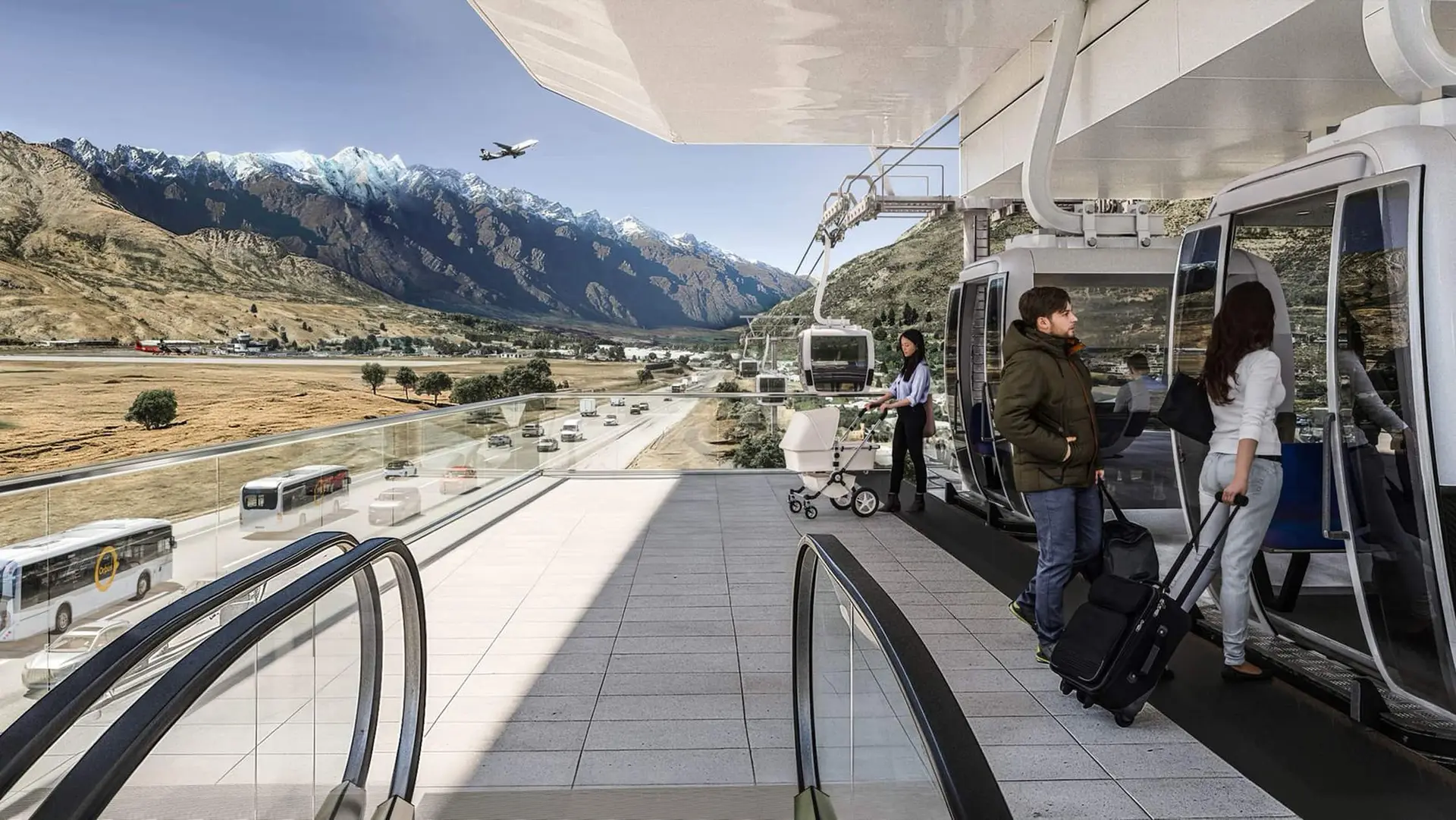
Resolve Group is proud to be supporting Southern Infrastructure Ltd in the delivery of the proposed Queenstown Cable Car project, a transformational mass rapid transit system designed to address congestion in the Southern Lakes region.

Engaged in late 2024, Resolve Group has supported Southern Infrastructure through the procurement and commercial development of specialist ropeway suppliers, drawing on our experience in progressing major infrastructure projects from concept to delivery. This work culminated in the appointment of world-class suppliers Leitner and Doppelmayr, providing the technical certainty needed to progress the project into its next phase.

As the project has progressed and gained momentum, Resolve Group’s role has expanded to include project controls and delivery support, providing specialist resources across supplier management, programme scheduling, and cost forecasting. The Resolve Group team has also delivered funding advisory services and supported early stage cost estimation.

This work builds on Resolve Group’s longstanding experience in ropeway and complex transport projects, including our involvement in the delivery of SkyWaka gondola at Mt Ruapehu and wider support to the Ruapehu Alpine Lifts team over many years. It reflects our broader capability in advising and helping clients get major infrastructure projects off the ground and into delivery, through strong procurement, commercial, and project governance.

Read the full Southern Infrastructure media release here: Southern Infrastructure Appoints World-Class Preferred Suppliers for $400m Queenstown Cable Car Network | Queenstown Cable Car
As many of us will have experienced when driving, walking, or cycling, in New Zealand, some of our older highway bridges do not provide facilities to safely accommodate people crossing by foot, cycle or micro-mobility vehicles.

Resolve Group’s Jamie MacDuff was involved in a recent NZTA project which sought to provide safer shared paths on three older state highway bridges in Waikanae and Ōtaki. “The safety improvements for pedestrians and cyclists offered by projects like this are compelling,” says Jamie.

Part of a wider programme to improve the old SH1 route through Kāpiti, the project provided three new walking and cycling clip-ons for three old state highway bridges using an innovative, cost-effective, lightweight design employing composite materials instead of the more conventional steel build. “The use of fibre reinforced plastic as a structural material for bridges and walkways isn’t common in New Zealand,” says Jamie, “but we are seeing increasing use overseas. It promises low maintenance, a long asset life and low mass compared to steel and timber and has cost advantages for some projects.”

Despite challenges, including a one-way detour at Waikanae, which created short term pain for locals, Jamie says, “when compared with other installation methodologies and scaffold options, these structures can be installed with less impact on the local community.” And indeed, the public response to the finished clip-on has been only positive. “As an industry, we should always be on the lookout for opportunities to innovate and improve,” says Jamie.

Along with promoting this innovative design solution, Jamie provided project management and delivery support to NZTA. He led options investigations, procured suppliers, managed regular progress reviews and facilitated the resolution of services clash issues with designers, and installation challenges with contractors, over an extended delivery period. The Waikanae bridge clip-on was completed in April 2024. The installation of clip-on shared paths to the Waitohu Stream and Ōtaki River bridges further north has now begun.