


New Zealand’s infrastructure spend is giving us lower value for money than almost every other country in the OECD according to Ross Copland, former Chief Executive of the NZ Infrastructure Commission Te Waihanga(Copland, 2024), and this needs to change.

NZ Transport Agency Waka Kotahi (NZTA), recognising that it had a gap in the monitoring and evaluation of its investment costs, recently commissioned Resolve Group to examine whether the variability of costs for common transport investments could be quantified, and what might be done to mitigate any differences.

Assessing a sample of 21 similar intersection improvement projects (typically highway roundabouts or local road intersection improvements) delivered across New Zealand from 2016, the research, led by Dr Carron Blom and Jamie MacDuff, found that despite the physical similarities in many of these projects, there was a very high level of variability in the indexed costs of these projects on a unit area basis, even when outliers were excluded. The research could not find any correlation between out-turn cost per sealed area and the nett effect of key project cost factors (such as pavement type, level of traffic management etc.) or other factors that could be influenced by the NZTA.

Our experience at Resolve Group is that a ‘whole-of-system’ approach is necessary for New Zealand to collectively meet its current and future infrastructure needs and indeed, the research revealed the need for system-level mitigations to be able to effectively monitor and evaluate actual investment costs.

To enable NZTA to establish a benchmark for cost variability, and to support changes within its operating practices (such as the recently developed standard methods of measurement (SMoM) and improved definitions for cost elements ), Resolve Group has proposed a range of interventions that aim to reduce variability in cost measurement and reporting that are embedded and/or created within organisational policies and procedures, and to enable infrastructure costs to be more comprehensively recorded, understood, and used to help manage, monitor and  forecast future investment costs, and so improve value-for-money infrastructure delivery.
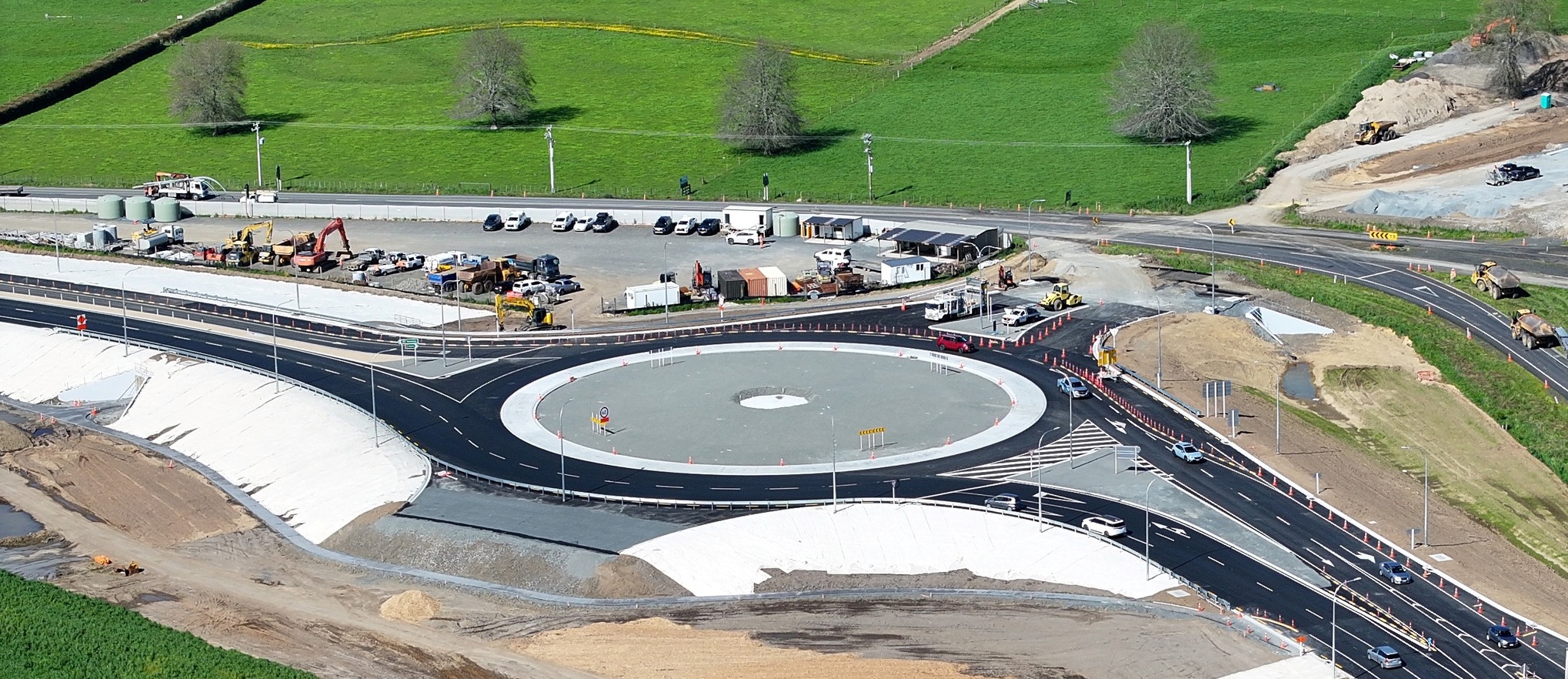
Resolve Group undertakes market surveys for our clients when they are considering putting new civil infrastructure projects to the market. Traditionally, this has been an exercise in identifying the factors that will support a decision on a procurement strategy by considering the state of market conditions.

However, in recent times we have seen some quite unprecedented shifts in market conditions, and for most client organisations looking to put work to the market today, it feels like Woody Allen was right when he joked that ‘the study of an economy usually shows us that the best time for purchase was last year’.

Indeed, due to a number of global factors, input costs are currently escalating rapidly across the Civil Infrastructure market and the workforce appears to be tapped out, with many of the firms in the sector facing increasing staffing and logistics challenges. At the same time, international events and fears of a global recession plus a wide range of local regulatory reforms (Polytechs, RMA, Environment etc.) are creating an uncertain investment environment for these same firms.

Many of our clients are having to rethink their work programmes whilst they look to see what can be done on the supply side to improve the productivity and skills of their workforces, reduce the costs and risks of bidding, and look for ways to improve access and competition for the physical resources needed to deliver the Civil Infrastructure projects of the future.

Resolve Group has been working with local and central agencies to examine these matters in depth, both regionally and nationally. We have been creating regional pipeline- and workforce-demand models to illustrate and identify specific challenges, and we have reviewed regional supply chains for skilled resources and key construction materials to identify the state of health of the market in order to support the right choice of procurement strategy in this new environment.

If you would like to discuss our work on the state of the Civil Infrastructure market, we would be pleased to talk with you and help you find a way to achieve your project goals in these very challenging times. You can email me, Jamie McDuff, in the first instance, or call the Auckland Office on +64 9 303 3461.